
Orange County Arrest Warrants Start in Court
Texas Code of Criminal Procedure Chapter 15 sets what an arrest warrant requires. Orange County lays out its felony path on a process page: arrest before a magistrate, a bond decision through the JP process, then review as the case moves ahead. The court you deal with depends on the charge. The county publishes no countywide public arrest-warrant roster and no universal bond chart, so work from the court and clerk named on your paper rather than a city citation portal. See Orange County felony process and Texas Chapter 15.
Arrest Warrants in Orange County
An arrest warrant is a court order authorizing an arrest under the standard and process that fit the case. Orange County felony matters may involve the District Courts and the District Clerk, while County Courts at Law, JPs, and municipal courts each hold other case types. The court file, charge, and bond terms need direct confirmation, since the public route here is limited. Only the issuing court can confirm what stands.
Orange County Arrest Warrant Clerk Records
The District Clerk serves the 128th, 163rd, and 260th District Courts and lists felony criminal files, warrants, capiases, writs, and related process among its duties. A felony arrest-warrant question goes there or to the assigned court, not to the Orange city case portal. The County Clerk is the separate route for misdemeanor County Court at Law files. That split matters when all you hold is a paper number and you cannot tell which office keeps it. The District Clerk office and duties page spells out the felony clerk route.
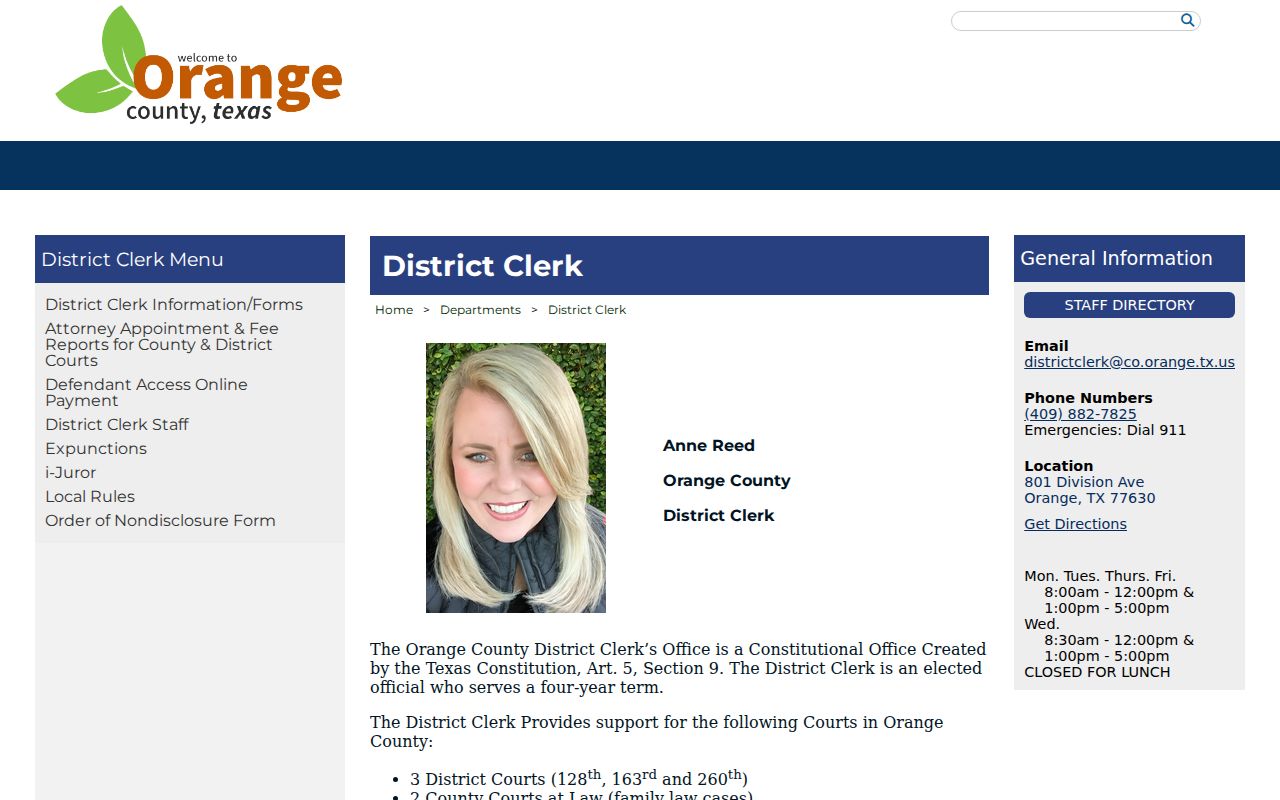
The official page shows the Orange County felony clerk route. It does not display any person's warrant or a live status field.
What an Orange County Arrest Warrant Contains
Orange County publishes no sample arrest-warrant form. Treat the items on this page as questions for the court, not fields every record will show.
| Warrant number | Use the identifier printed on the court document; no local number format was captured. |
|---|---|
| Person named | Check all identifying details with the court; a name alone can match another person. |
| Charge or case | Ask the clerk to identify the case file and explain any short label. |
| Issuing judge or court | Names the court that controls settings and recall. |
| Bond | No countywide amount table was found; ask the assigned court or attorney. |
| Record date | Ask when the record was entered and whether a later event changed it. |
Orange County Arrest Warrant Access Limits
A public-information request can seek an existing sheriff or court document, but it does not guarantee release of every warrant or affidavit. Sealed, juvenile, protected, or law-enforcement-sensitive material may be withheld or redacted. The court sets the access rules for its case record. For a copy, give the agency a narrow date range and a case identifier. For live status, call the issuing court instead; the Sheriff Records office states it does not conduct legal research or create information. Read the Sheriff Records request rules and the Texas Public Information Act.
How Orange County Arrest Warrants Are Served
The Orange County Sheriff's Office lists Warrants among its law-enforcement support functions. City police may serve local process, and the sheriff's Communications unit maintains TCIC/NCIC entries for its agency and some local departments. Those systems stay restricted to law enforcement. After an arrest, the felony process page describes a magistrate appearance and a bond decision. Civil deputies also serve subpoenas, citations, protective orders, and writs, though service by a deputy does not make every paper an arrest warrant.
Orange County Arrest Warrant Service and Dispatch
The sheriff's Warrants, Records, and Communications functions are listed separately in Orange County. Communications runs 24-hour dispatch and maintains law-enforcement entries, while the public records and support pages list weekday office hours. Dispatch never sleeps, but a records counter or court clerk may. Call the sheriff or the court before you travel and confirm the right office. No office here runs a 24-hour surrender desk or a public warrant window. See Sheriff support units and Communications responsibilities.
Arrest Warrant vs Summons vs Bench Warrant
These terms name different court actions. An arrest warrant authorizes custody under the issuing order. A summons directs a person to respond or appear. A bench warrant follows a failure to meet a court obligation. For local procedure, see Orange County bench warrants.
| Feature | Arrest Warrant | Summons | Bench Warrant |
|---|---|---|---|
| What it orders | Arrest under the signed order | Appear or answer as directed | Custody after a court obligation is missed |
| Basis | Probable-cause process | Notice to respond | Failure to appear or comply |
| Who issues it | Judge or magistrate | Court or authorized officer | Judge in the existing case |
| Next step | Confirm terms with court and counsel | Meet the stated response date | Ask the issuing judge about setting or recall |
Federal Warrants Use Another Court
A federal docket in the Eastern District of Texas, Beaumont Division, sits apart from Orange County's District Clerk, County Clerk, JP, and municipal records. A federal search cannot tell you whether a local court issued a warrant. The Beaumont clerk and PACER are the federal routes. CourtListener/RECAP may help you find a docket, but it is not an official record. Ask the relevant court clerk to confirm any federal filing or warrant. Start with Eastern District of Texas, Beaumont and PACER access information.
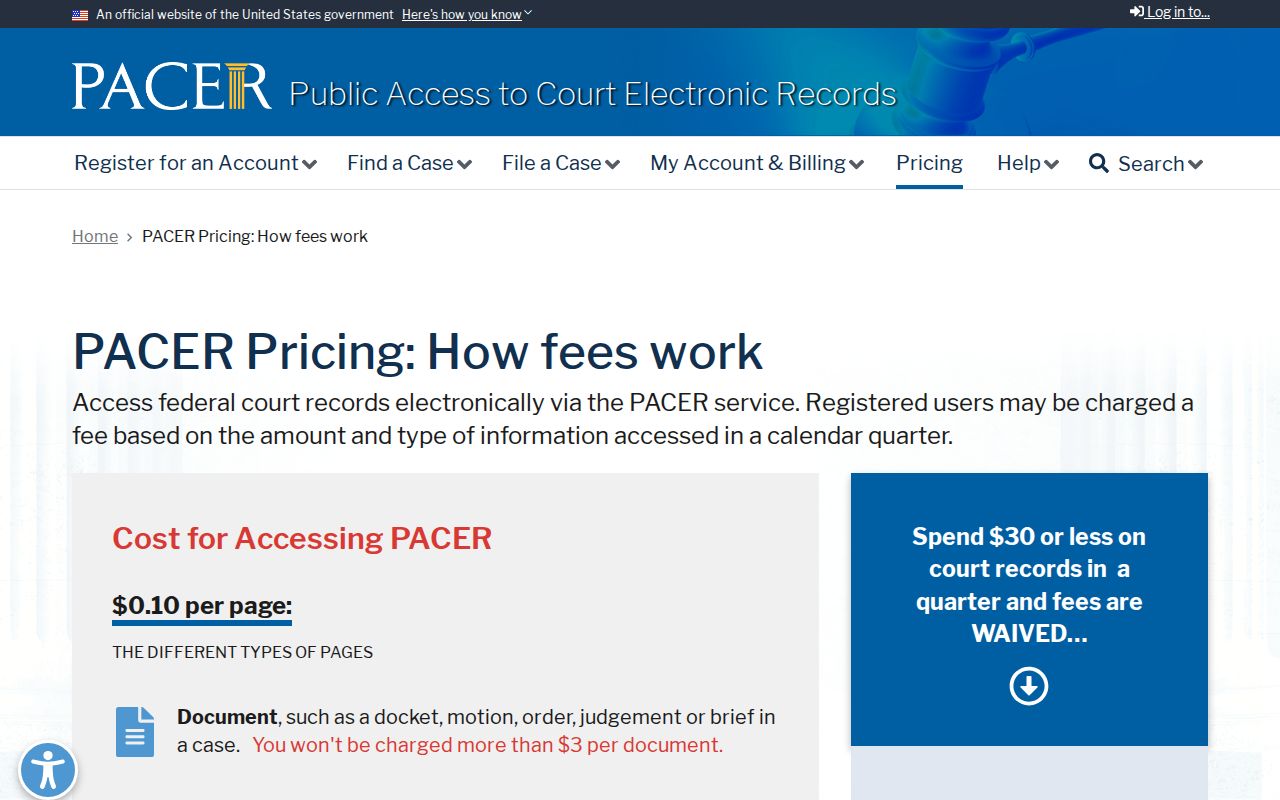
The image concerns federal docket access, not the county’s local warrant portal.
What to Do If There Is a Warrant for You
If the record may be yours, ask an attorney and the issuing court to confirm the case, its status, bond terms, and appearance instructions. Orange County has no single bond desk and no universal bond schedule. The court's directions decide whether you need a setting, a counsel filing, bond, or another step.
Important: Do not rely on a city list or a county portal error; get current instructions from counsel and the court that issued the warrant.